Energy tracking for better daily decisions
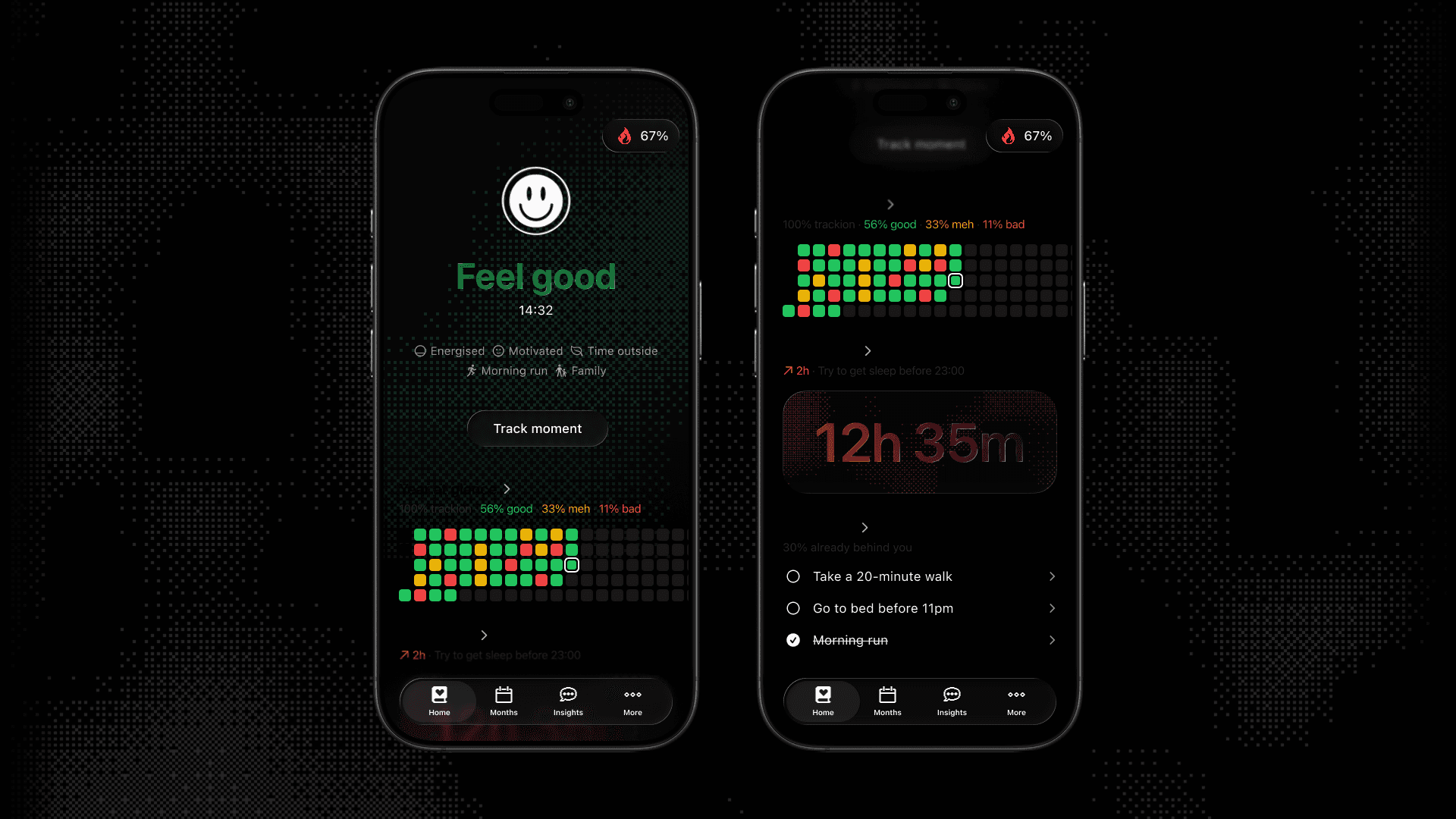
Daygrain is my current product experiment: a personal energy and decision-making app built around daily logging, Apple Health signals, and honest self-awareness. Building in public, not a client pitch, but proof of the same builder mindset I bring to founder engagements.
- Health
- iOS product
Context
I build my own products alongside client work. Daygrain started from a simple observation: mood and energy swings were hard to explain in hindsight, and generic wellness apps either over-scored everything or buried the signal in charts. The goal was a calm daily log that connects how you feel with sleep, activity, and patterns over weeks, without turning life into a gamified streak.
Challenge
Solo product work forces trade-offs every week. The interface had to feel trustworthy on a dark, minimal canvas while staying fast to log, one tap for mood, optional notes, and a year-at-a-glance view that actually helps reflection. Apple Health integration needed to add context without making the app feel like a dashboard clone.
My role
I own product direction, UX, visual design, and the public build narrative. Decisions are made the same way I advise founders: ship the smallest honest version, learn from real usage, document what failed, and resist feature sprawl until the core loop is solid.
What I built
- Daily energy and mood logging with a year overview, patterns visible without opening analytics rabbit holes.
- Apple Health hooks for sleep and activity context, surfaced only when they clarify the day, not as default noise.
- Dark, forest-green visual system aligned with the brand on site, PixelBlast background is the same language as the product band on petermarc.com.
- Building in public on X: real product calls, scope cuts, and TestFlight → App Store milestones documented as they happen.
Where it stands
Live on the App Store, iterated in public. Daygrain is not positioned as a case study for hire, it is evidence that I sit on the founders' side of the table: shipping under constraint, making product calls without a large team, and staying honest when something does not land.
 Experiment
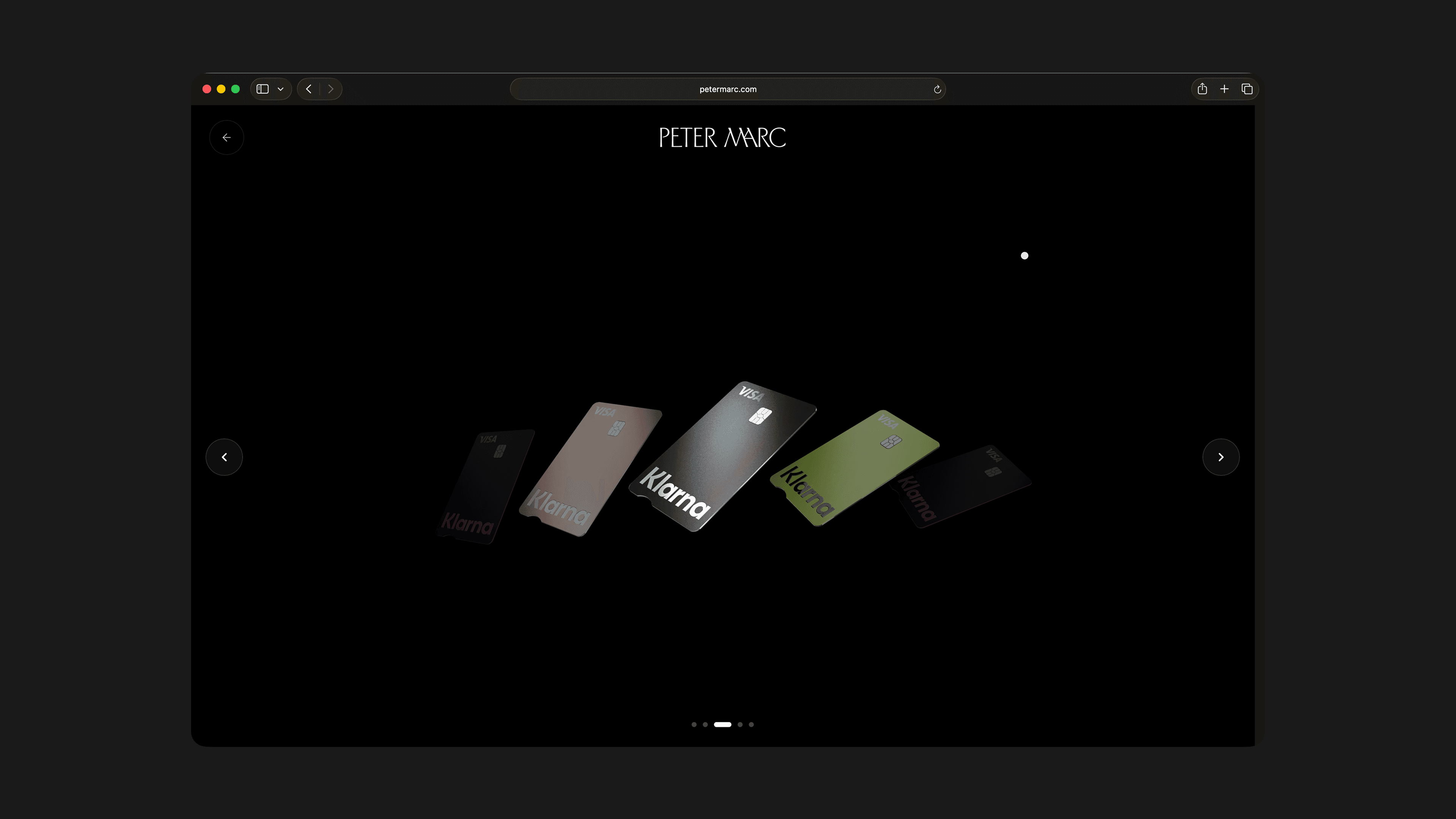
Holographic card carousel
Klarna card selector that feels like flipping through Pokémon trading cards, ghost-duplicate infinite scroll, pointer tilt, accelerometer-driven holo layers, and iOS haptic steps..
 Experiment
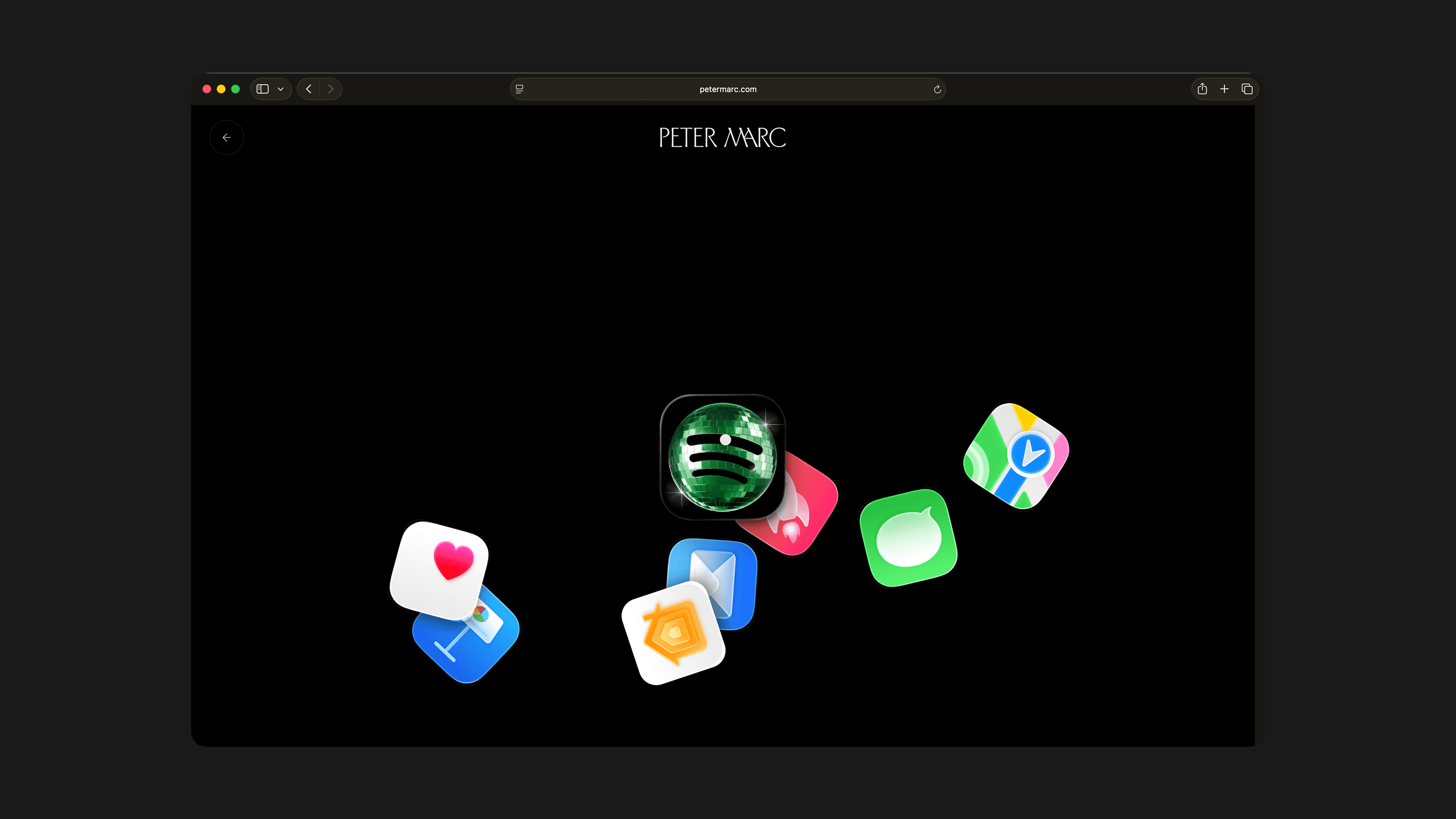
Icon burst
Native Apple-style app icons bursting outward in every direction on tap.
Have a product flow that feels harder to explain than it should?
Send me your product, MVP, deck, or prototype. I'll tell you where I'd start.