“I can fully recommend Peter as a reliable partner, great UI designer and super-communicative person. He was proactively focused on making sure all details end up in the consistent overall visual strategy.”
PropTech platform: brand and product rebuilt together
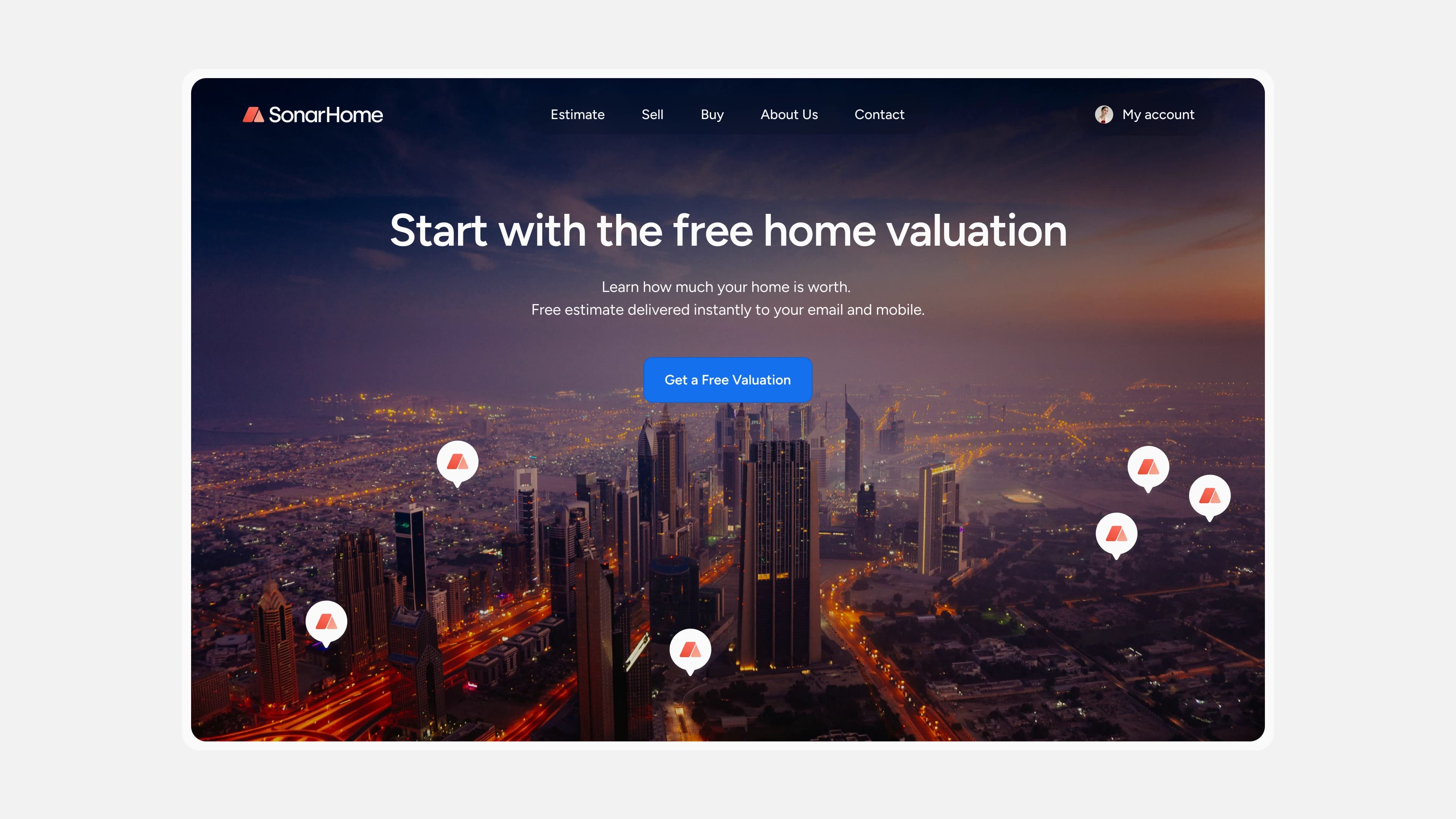
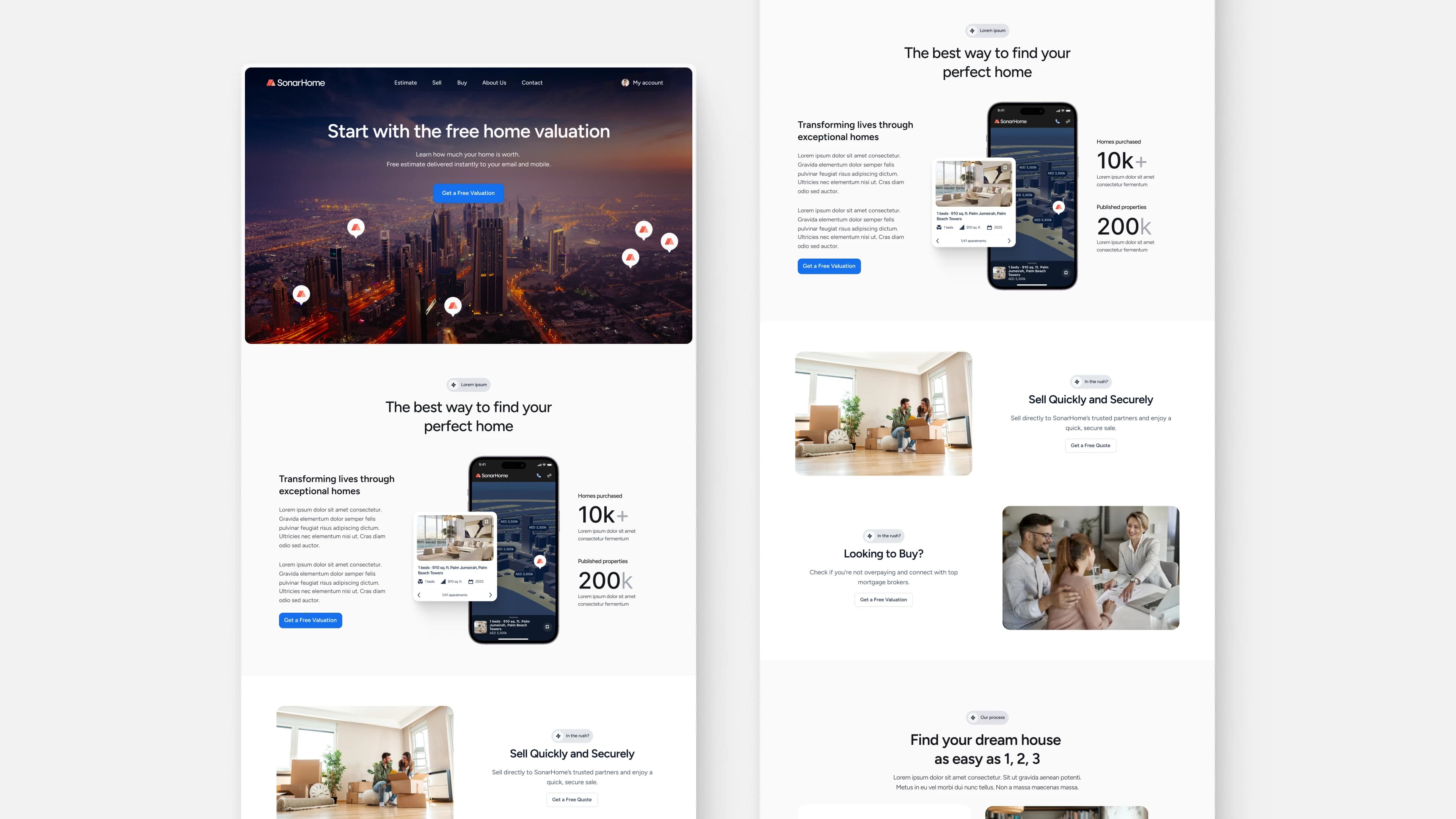
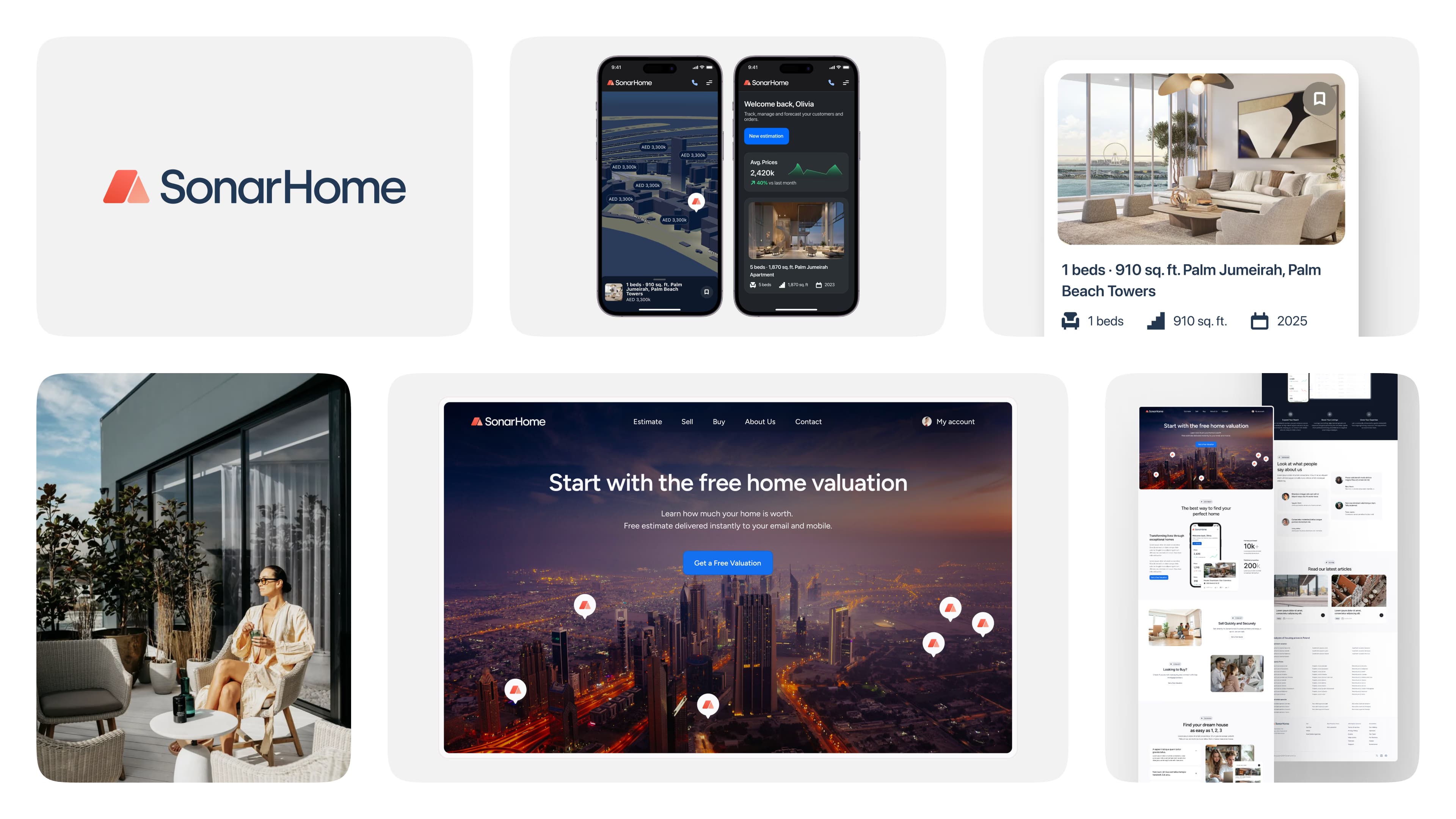
Led the full redesign of SonarHome, an early-stage Polish PropTech platform. Tackled brand and product simultaneously, so the visual language was built around the actual product structure, not applied on top of an existing IA. Bounce rate: 65% to 30%. Valuation completion: 62% to 86%. Task time: 4:10 to 2:20.
- PropTech
- SaaS
Context
SonarHome was an early-stage Polish PropTech platform providing data-driven property valuations for homeowners preparing to sell. Forbes.pl covered the company's market ambitions around the same period. When I joined, the product had a strong core idea but significant execution problems: no cohesive visual identity, no consistent user flows, and no responsive design. Bounce rate was 65%, most users left before seeing any value. 60% of users who stayed couldn't complete the valuation process. The brief was to fix the product. The constraint was that the brand also needed to be rebuilt, and both had to happen at the same time.
Challenge
The typical sequence is: rebrand first, then redesign the product. That approach produces a product that looks different but communicates the same way, because the visual identity gets applied on top of an existing information hierarchy rather than being built around the product's actual structure. I argued for doing both simultaneously. The visual language had to be designed around the IA, not the other way around. That required aligning stakeholders on what the product had to communicate before any design work started.
My role
I owned the IA, UX flows, design system, and stakeholder alignment from first workshops through handoff. For the visual rebrand, I defined the creative direction and design principles first — grounded in the product structure, not a style exercise — then coordinated execution with a specialist brand partner so typography, colour, and component styling reinforced the same hierarchy users moved through in the valuation flow. Every visual decision had to earn its place in the product, not sit on top of it. Solo design lead throughout.
What I changed
- Started with stakeholder alignment before any design work. Defined what the product had to communicate, expertise, data credibility, simplicity, trustworthiness, and made that the design brief for both the rebrand and the IA. This was the prerequisite for everything else.
- Research focused on where users lost confidence during the valuation process, not which features were missing. Conducted user interviews and flow mapping to understand what information users needed to see, in what order, to move through valuation without anxiety. Benchmarked comparable valuation flows to identify what built confidence and what created doubt.
- Established the IA before touching any visual decisions. What users needed to see, in what order, to reach a valuation result with confidence. The visual design was built on top of that structure.
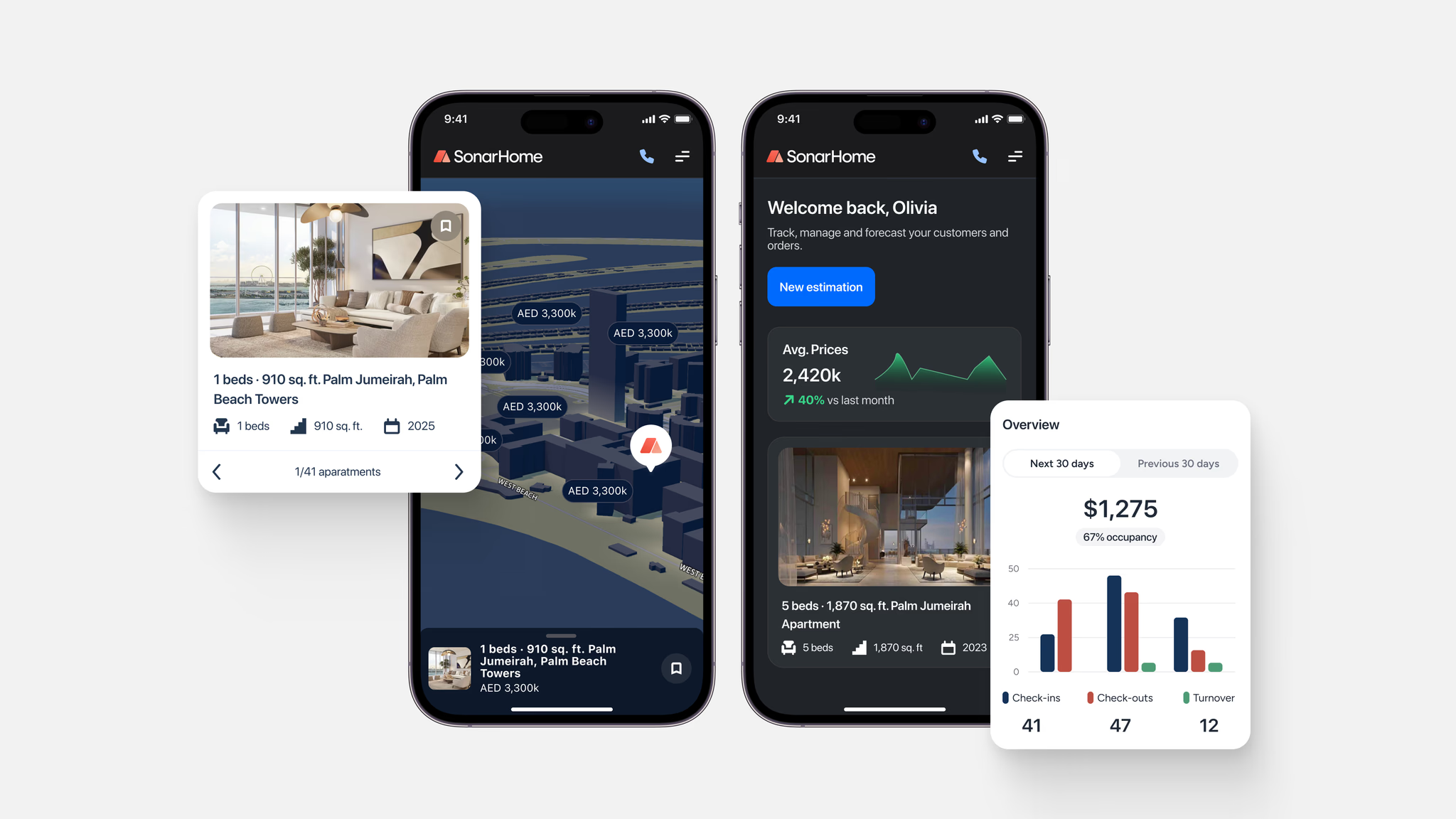
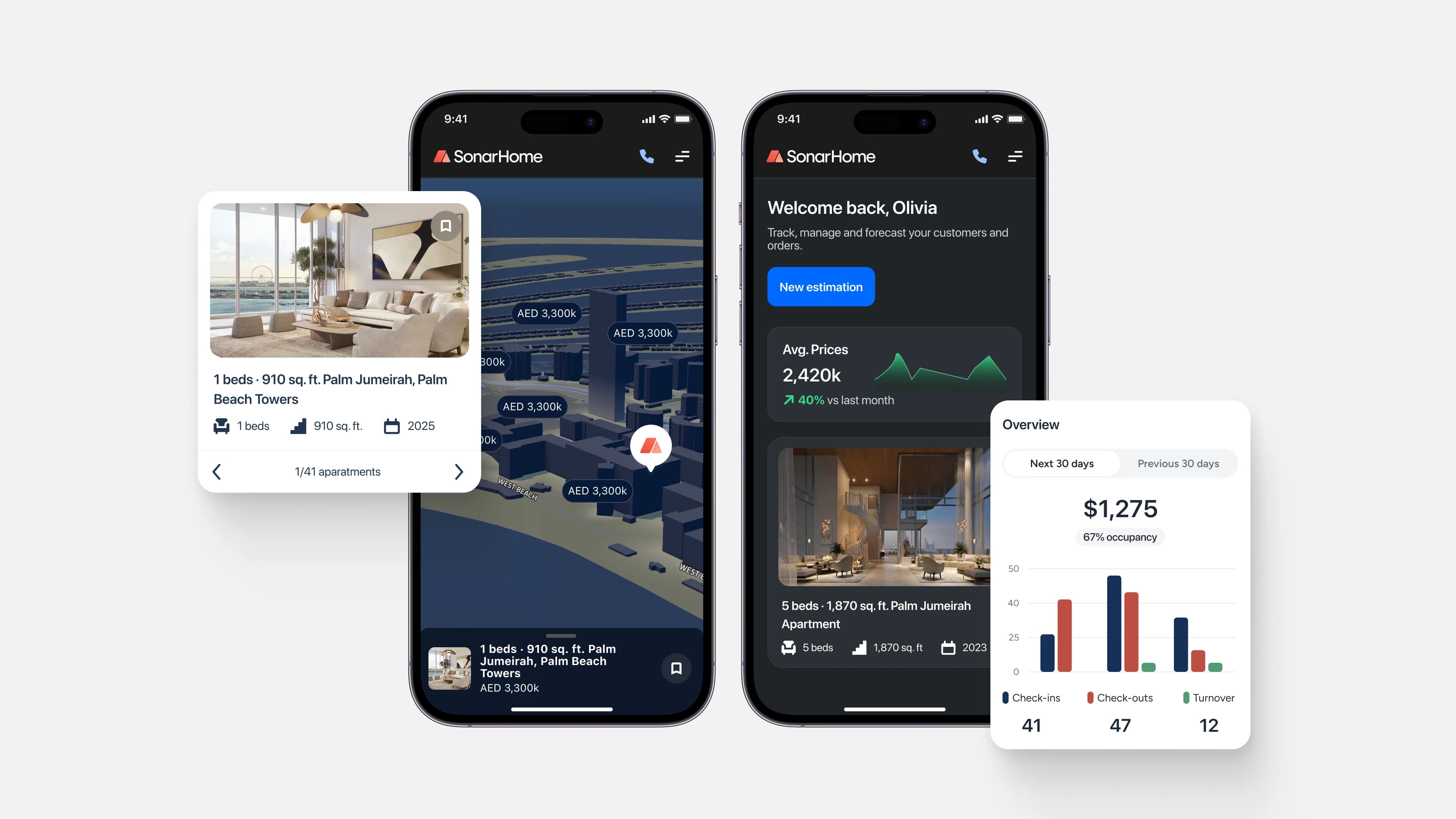
- Responsive dashboard with contextual next-step recommendations. Users always knew what to do next, not just where they were in the flow. Removed the decision points that were causing mid-valuation drop-off.
Outcome
Bounce rate: 65% to 30% (−54%). Valuation completion: 62% to 86% (+24%). Task time: 4:10 to 2:20 (−44%). The simultaneous rebrand and product redesign meant the new visual language reinforced the product's structure rather than sitting on top of an old one.
Impact
Bounce rate
30%
from 65%
Valuation completion
86%
from 62%
Task time
2:20
from 4:10
Recommendation

Have a product flow that feels harder to explain than it should?
Send me your product, MVP, deck, or prototype. I'll tell you where I'd start.